Trending

Rustic decor is forgiving by nature. Chipped paint, mismatched wood, a little rust on a hinge — that's the point. But that same forgiveness is why so many rooms end up feeling heavy, dark, or like a themed restaurant. The difference between a room that looks collected and one that looks staged rarely comes down to budget. It comes down to a few decisions: how much wood is enough, where the eye gets to rest, and whether anything in the room is actually comfortable. Here are the eight mistakes that show up most often, and the fixes that work in real houses.
You can usually spot this one from the doorway: a bear silhouette, a "Cabin Life" sign, plaid pillows, antlers, a cowhide, a wagon wheel, and a galvanized bucket doing nothing in particular. Each piece is fine on its own. Together they turn a living room into a set.
Rustic works best as a layer over a calm foundation, not as a costume. Pick two or three rustic elements you genuinely love and let everything else stay quiet — warm white walls, simple linen curtains, plain ceramics. A good test: if a visitor can name your theme in one word, take one thing down.
Wood floors, wood ceiling, wood table, tan sofa, beige walls, and a jute rug. Nothing is wrong with any of it, and yet the room feels flat and a little airless. Brown on brown removes contrast, and contrast is what makes texture read.
You don't need to repaint everything. Add one non-brown material in every direction a person looks: black iron hardware, white stoneware, a dark green plant, glass, brass. Vary your wood tones on purpose, too. A dark walnut piece beside pale pine looks gathered over time; five matching honey-oak pieces look like a showroom floor.
Factory-distressed furniture has a tell. Real age happens unevenly, and it happens where people actually touched the object. Here's how to spot the difference before you pay for "vintage":
Buy one real old thing a year instead of a cartload of new-old things. A single battered workbench or an honest farmhouse table carries more weight than a whole room of imitation.
This is the most common fixable error. Small art floating on a big wall, a rug that stops short of the sofa's front legs, a towering hutch squeezed into a narrow dining room, a delicate side table stranded in a large space.
When in doubt, go bigger with fewer pieces. One large reclaimed frame beats six small ones every time.
A raw plank bench, a scratchy wool blanket, a hard church pew, splintery floorboards. Character is wonderful until nobody wants to sit in the room. Rustic doesn't have to mean uncomfortable — old farmhouses were layered with cushions, quilts, and rugs for exactly this reason.
Fix it cheaply: add a thick seat cushion in a natural fabric, sand and oil any raw edge you touch, put felt pads under wooden legs, and layer a wool rug over bare boards. If a chair can't be sat in for an hour with a book, it's decor rather than furniture.
A single ceiling fixture with a cool white bulb will kill the warmth of even the best wood. It casts flat light, hard shadows, and makes every surface look grey.
Choose warm bulbs — look for 2700K on the box — and light a room from at least three points: an overhead, a task light, and something low and ambient, like a table lamp or a pair of wall sconces. Add a dimmer if you can. Then use a small uplight near a beam or a stone wall; grazing light from below is what makes texture look deep instead of painted on.
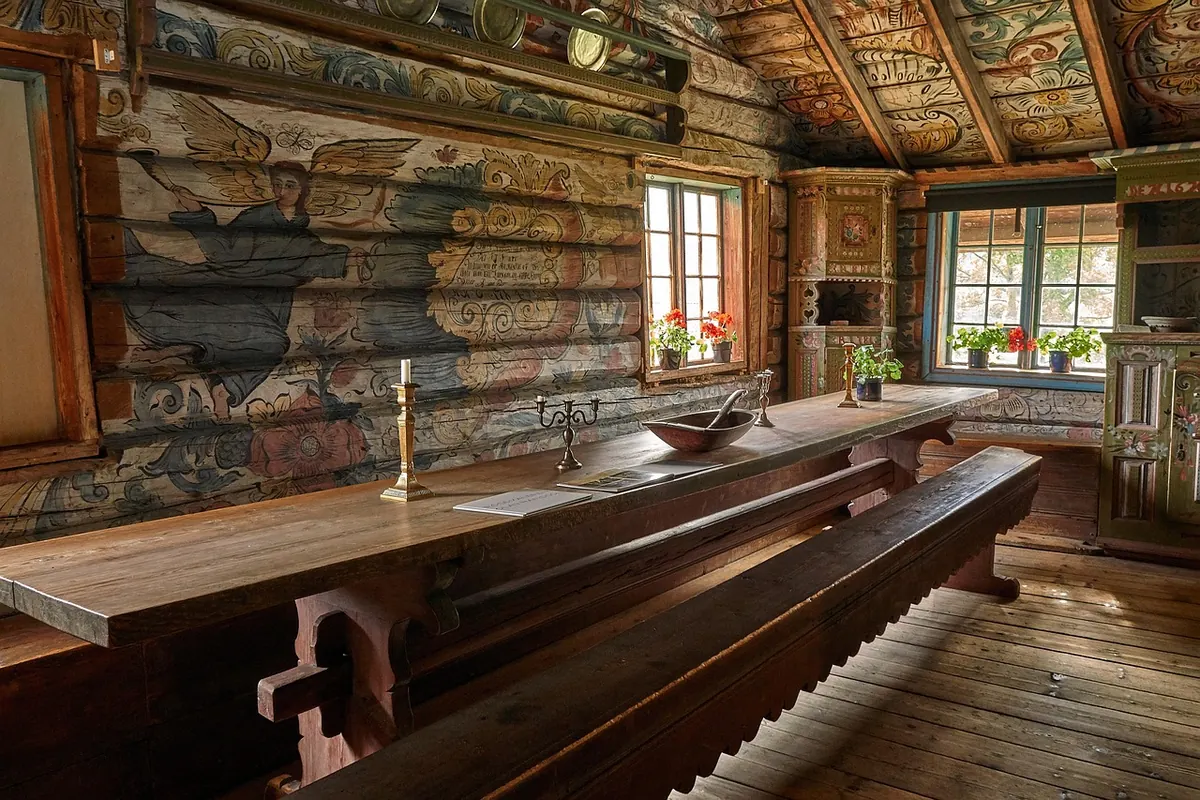
When twelve objects on a shelf all have the same size and visual weight, the eye has nowhere to land. This is what turns a collected room into a crowded one.
Give each surface one hero and a supporting cast. Group in threes with varied heights — a tall jar, a low bowl, a small framed print. Leave real empty space; it's a material like any other. Rotate the rest through a cupboard rather than cramming it in, and keep one basket per room for the everyday clutter that has to live somewhere.
Faux beams and a wagon wheel in a plain drywall box, or a mirrored console in a century-old farmhouse, both read as borrowed. The room is already telling you what it wants to be.
Work with what's there. In a newer house, add texture through board-and-batten trim, warm white paint, wide plank flooring, and natural materials in the furniture. In an older house, don't cover the good parts — highlight the trim, the wide boards, the uneven plaster. If you want a beam, put it where a beam would actually live, or use one heavy reclaimed mantel as the single focal point.
You don't need to redo a room this weekend. Pick one surface and clear it completely. Swap one cool bulb for a warm one. Add one non-brown texture — a linen throw, a stoneware bowl, a plant. Live with it for a week and notice how the room feels in the evening, not just in daylight.
Then repeat. Rustic rooms get good the way real ones always have: slowly, and with a little restraint.
Photo: Darkmoon_Art / Pixabay