Trending

A country kitchen is not a look you apply at the end with a coat of chalk paint. It comes from the way the room is built: a sink deep enough to hold a roasting pan, shelves that hold the bowls you actually use, counters that shrug off flour and hot pans. Get those three decisions right and everything else — the enamel jug, the ticking stripe, the scrubbed pine table — falls into place. Get them wrong, and no amount of styling will rescue the room. Here is a working checklist, written for people who cook.
Measure the sink base cabinet before you fall in love with anything online. Apron-front sinks are usually sold in widths of 24, 30, 33 and 36 inches, and the apron sits proud of the cabinet front, so it steals a couple of inches of standing room. If you are tall, that matters more than you think.
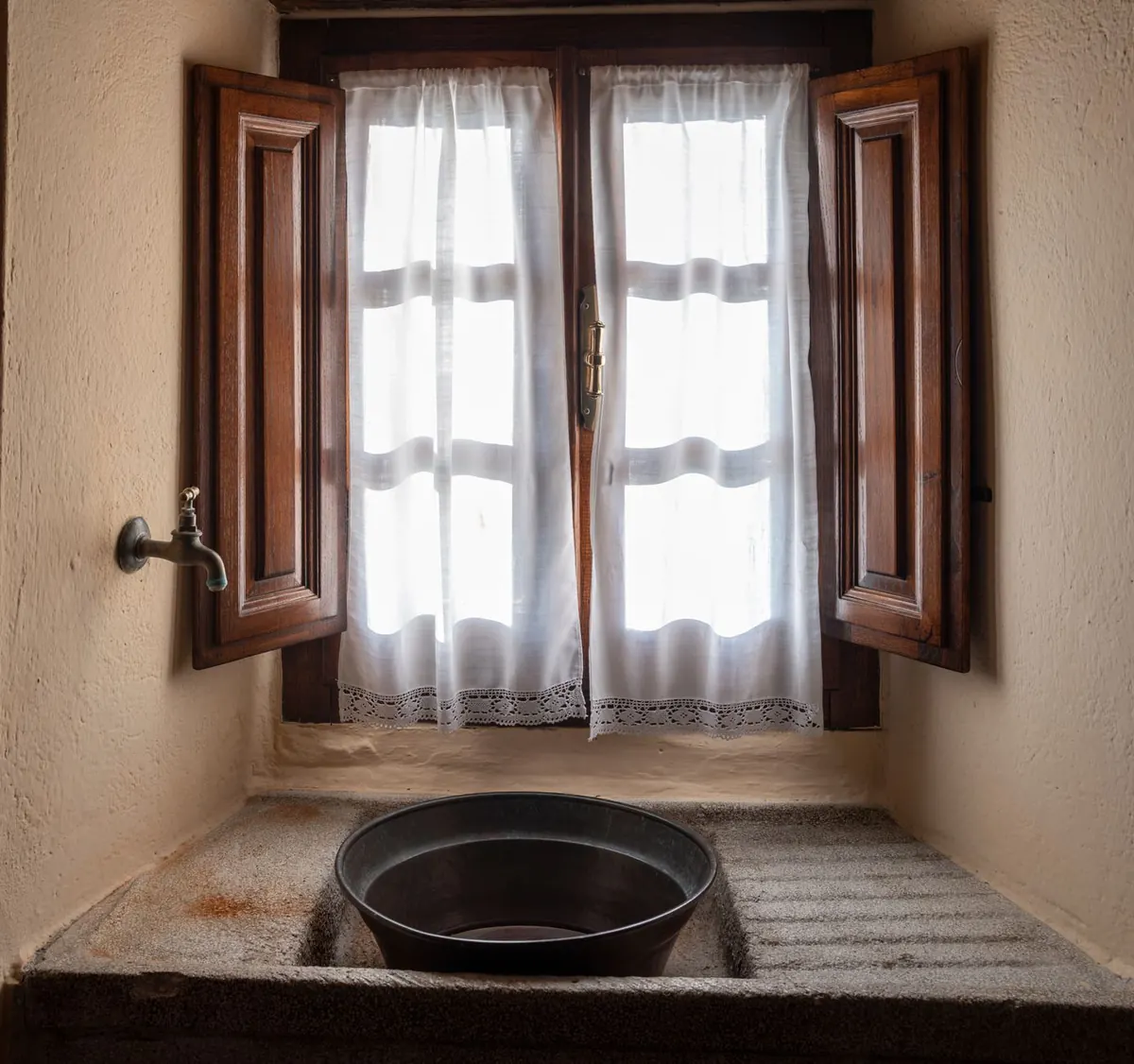
A farmhouse apron sink is the signature piece of a country kitchen, and it earns its place: the low front means you can stand close, and there is no rim to catch crumbs. An undermount stainless or fireclay sink is easier to wipe into and cheaper to change later. If you want the look without rebuilding cabinets, an apron sink that sits flush with the counter face is a reasonable compromise.
Whatever you choose, go for a bowl at least nine inches deep and pair it with a faucet that reaches the far corner. A bridge faucet with a separate sprayer suits the style, but check that the spout clears tall stockpots when you fill them.
Open shelving is the most photographed part of a country kitchen and the most easily regretted. It works when the shelves hold things you like looking at, and fails when they become a dumping ground. Plan the contents before you plan the spacing.
Keep open shelves away from the stove and the dishwasher. Grease and steam will find them, and you will be washing crockery you never used.
Every rustic counter surface has a personality, and most of them ask for something in return. Choose the one whose maintenance you will actually do.
Warm, forgiving, and kind to knives. Edge-grain boards are stable; end-grain blocks are gentler still. Oil with food-safe mineral oil when the wood looks dry — monthly in a busy kitchen — and never let water sit at the sink edge, where seams and joints fail first. Keep a separate landing zone for hot pans, because wood scorches.
Soapstone is non-porous and heat tolerant, so it does not stain the way porous stone can. It is also soft: it scratches and dings, then can be sanded and oiled back to an even charcoal grey. That is the whole appeal. Slate behaves similarly, with more visible flaking along the edges over time.
Marble etches on contact with lemon juice and vinegar. If you want a spotless counter, it will disappoint you; if you want a surface that records every Sunday lunch, it is hard to beat. Granite and quartzite are tougher and more uniform but still want sealing according to the fabricator's instructions. Skip acidic cleaners on any stone.
A simple rule: the harder the counter, the more it hides. The softer the counter, the more it remembers. Decide which one you would rather live with.
Once the big three are settled, small choices do the heavy lifting. Cup pulls and bin pulls on drawers, black iron hinges, a deep pendant or two over the sink with warm bulbs rather than cool white. A scrubbed pine dresser, a bread board propped against the splashback, a row of hooks by the door. None of it needs to be expensive, and none of it should be bought all at once. Country kitchens look collected because they are.
Rustic materials are not maintenance-free, and anyone who tells you otherwise is selling something. Wood needs oil. Stone needs sealing. Copper changes colour. Soapstone collects the odd scratch. What you get in return is a kitchen that improves with use instead of fighting it, where a chip is a story rather than a catastrophe.
So keep a small kit under the sink: mineral oil, a soft cloth, a fine sanding pad, a neutral stone cleaner, and a couple of trivets. Ten minutes of care every few weeks will keep the room honest and handsome for decades. Buy the sink you can stand at comfortably, the storage you will actually keep tidy, and the counter you are willing to look after. Everything else is decoration.
Photo: tommy picone / Pexels