Trending

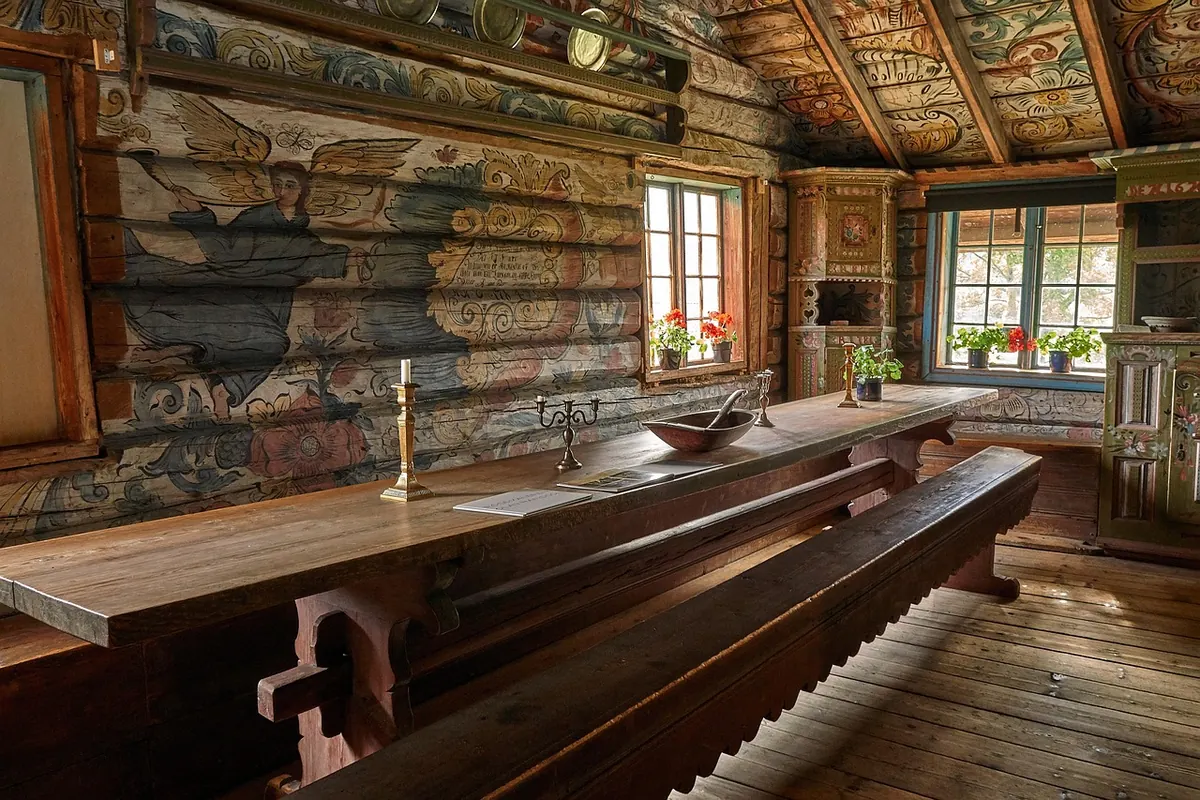
Modern farmhouse and rustic decor share a family tree. Both lean on wood, both welcome a little worn metal, and both look wrong in a room full of glossy plastic. Put them side by side, though, and the differences show up fast: in the color on the walls, the finish on the table, the bulbs in the fixtures, and how much is sitting on the mantel. Neither is better. They simply answer different questions about how a home should feel.
Rustic decor is about age and origin. Every piece is allowed to look like it came from somewhere: a barn, a workshop, a farmhouse kitchen that was actually used. Modern farmhouse is about editing. The same warmth, but cleaned up, brightened, and arranged with a plan.
Try it with one piece of furniture. A rustic coffee table is often a chunky reclaimed oak slab with visible saw marks, knots, and maybe a crack that was left alone. A modern farmhouse coffee table might be white oak too, but sanded smooth, finished matte, with tapered legs and no drama. Same material family, completely different intention.
Modern farmhouse runs light. Think white, cream, warm gray, and greige on the walls, with one strong dark accent such as matte black window frames or cabinet hardware. The palette is deliberately narrow, usually two wall tones plus a single dark note, which is what keeps those rooms feeling calm instead of busy.
Rustic runs deeper and warmer. Browns of every shade, ochre, brick red, forest green, aged copper, and the natural color of whatever the material already was. Rooms tend to be darker and more layered, because the color is coming from objects rather than from a paint card.
A practical way to choose: decide whether you want the room to feel aired out or settled in. If you want light bouncing around, go farmhouse. If you want to sink into a space at the end of the day, go rustic. One caution: gray-washed wood and cool gray walls push any room toward the farmhouse end, even if the furniture is rough and old.
Modern farmhouse favors shiplap, white oak, butcher block, soapstone or matte quartz, slim black metal, cotton, linen, and simple wool. Surfaces are smooth and quiet to the touch. Rustic favors reclaimed barn wood, hewn beams, hand-thrown pottery, wrought iron, cast iron, jute, leather, hides, raw stone, brick, and galvanized tin. Surfaces have grit, and you are supposed to notice.
Notice that none of these swaps changes the room's bones. You are adjusting texture, not structure, which is why this is the cheapest place to start experimenting.
Modern farmhouse lighting is about layers and function. Recessed lights do the general work, then pendants over an island, sconces beside a mirror or a doorway, and one or two lamps to fill the corners. Fixtures stay simple: gooseneck barn lights, dome pendants, glass globes, often in matte black or aged brass.
Rustic lighting is about pools of light rather than an even wash. Fewer fixtures, lower placement, and warmer output: amber glass, Edison-style bulbs, lanterns, candle-style sconces, and the occasional branch or antler chandelier that acts as sculpture as much as light source.
In both styles, keep bulbs around 2700K and put dimmers on everything you can. Warmth is easy; controllable warmth is what makes a room feel finished.
If your farmhouse room feels flat, add lamps and sconces rather than more overhead light. If your rustic room feels gloomy, raise the output slightly at the task areas, like the kitchen sink or reading chair, and leave the rest low.
Modern farmhouse styling follows a rule of subtraction. Fewer objects, larger scale, and nothing that does not work for a living: a stack of cutting boards, a ceramic crock of utensils, a wire basket, one substantial framed print, a simple branch in a vase. Symmetry is common, and empty space is treated as part of the design.
Rustic styling follows a rule of accumulation, and that is the appeal. Old lanterns, enamelware, vintage hand tools, stacked books, stoneware crocks, dried branches, a quilt folded over a chair, a hide on the floor. Arrangements are asymmetrical and layered, and they usually tell a story about where things came from.
Two quick techniques. In farmhouse rooms, style in threes: one tall object, one soft object, one textured object, then stop. In rustic rooms, group by category, vary the heights, and repeat one common thread, such as warm brown or aged metal, so the collection reads as intentional rather than scattered.
The happiest rooms usually pick a lead style and let the other play a supporting role, roughly seventy percent to thirty. Rustic bones with farmhouse finishes is a reliable combination: exposed beams and a stone fireplace paired with cream walls, linen curtains, and slim black hardware. It reads warm but not heavy.
Watch for a few common clashes. Polished chrome next to reclaimed barn wood looks accidental. Heavy orange-toned pine under cool gray walls turns muddy. Multiple plaids against crisp white shiplap starts to feel like two houses in one room. Pick your lead style first, and most of these problems solve themselves.
Start with the one object you would never get rid of, whether that is a weathered bench, an inherited cabinet, or a clean-lined sofa. That piece usually announces which direction the room wants to go. Then set a limit: two wall colors, three metals at most, and one wood tone that repeats at least three times. Choose your lighting based on how you actually use the room, bright and layered for cooking and homework, low and pooled for reading and evenings. Finally, clear every surface, then put back only what you love and what you use.
If you are undecided, borrow the rustic version of texture and the farmhouse version of color. Warm neutrals plus one genuinely rough, old surface gives you the best of both, and it is far easier to live with than committing hard to either side.
Photo: Glavo / Pixabay