Trending

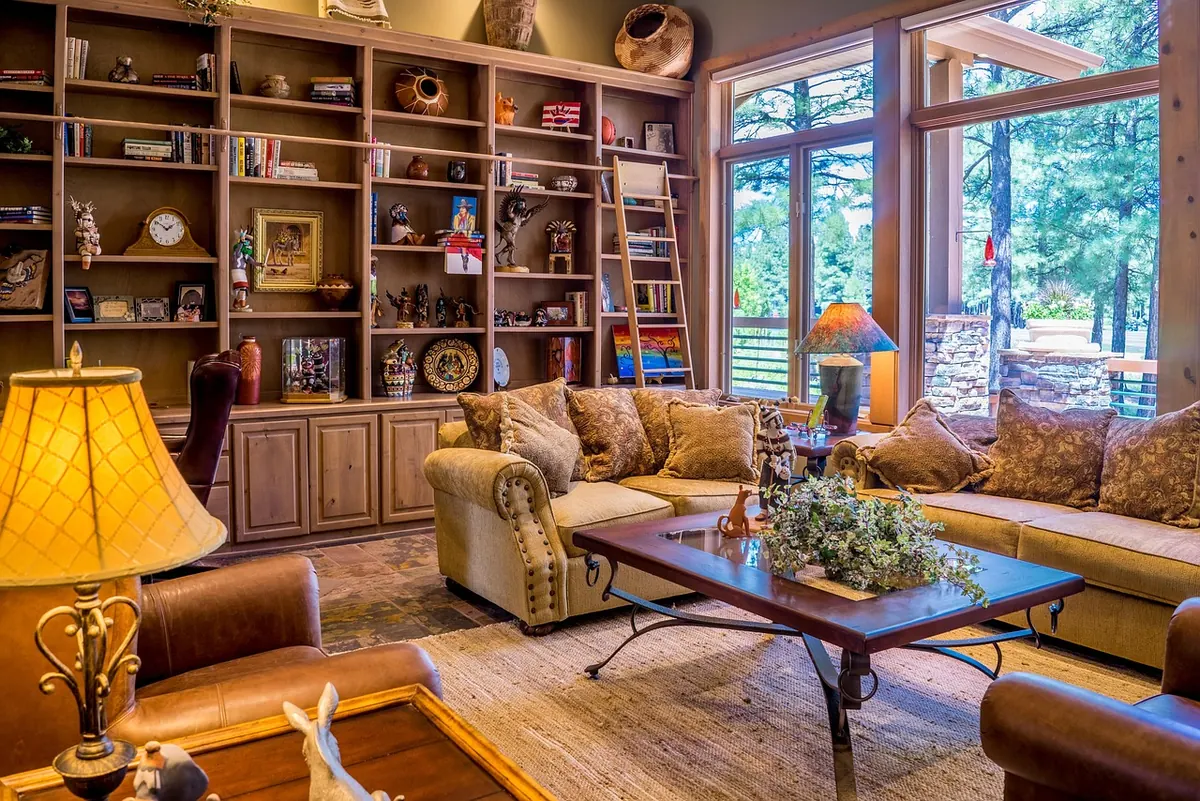
A rustic coffee table works like a mantel: it holds the eye, gathers the room, and quietly tells a visitor what kind of home they've stepped into. The trouble is that most of us either under-style it — one lonely candle and a remote control — or pile on so many flea-market finds that there's nowhere left to set a mug. The fix isn't more stuff. It's layering with intention, the same way you'd build a bed or dress a farmhouse shelf. These seven rules will get you there.
Every good arrangement sits on something. A base layer keeps small objects from drifting apart and gives the eye one place to land. A shallow wooden tray, a galvanized sheet pan, a slab of reclaimed oak, a piece of antique linen — any of these will do.
Pick one and let it stay put. The tray isn't decoration; it's structure. It corrals the candle, the matches, the little bowl of dried stems and the coaster you actually use, so the whole collection reads as a single object instead of five strays. On a long table, a runner does the same work sideways and softens the hard edge of a plank top while it's at it.
Flat arrangements read as clutter, no matter how nice the individual pieces are. Height is what makes a table look styled, and you only need three levels.
As a rough guide, aim for something near three inches, something near six, and something near twelve. You don't need a ruler — you need the contrast, because a table where everything rises to the same height looks like a display case.
Place the tallest piece at about the one-third mark rather than dead center. Centering it makes the table look staged; nudging it off-axis makes the whole room feel settled. Then balance it with the middle-height item on the opposite side, and let the low layer run underneath both.
A wooden tray on a wooden table with wooden candlesticks is a beige blur. Rustic rooms live on contrast, so count your materials before you walk away.
The soft element matters most, and it's the one people forget. A folded linen runner, a scrap of burlap under a crock, a small knitted square beneath a bowl — anything with weave or nap gives the hard surfaces something to push against. Metal is your second accent: a pewter dish, a tin candle pan, or an old iron hook holding a pair of snips.
Fresh flowers are lovely for a weekend and sad by Thursday. For a table you live around, dried and gathered materials hold up better: hydrangea heads, wheat, eucalyptus, pinecones, seed pods, bare twigs in a crock, a bowl of smooth stones.
One rule saves a lot of dusting: skip anything that crumbles. Crushed leaves and dried petals look romantic in photographs and like housekeeping failures in real life. And go bigger than feels comfortable. A single armload of branches in a tall crock will read better than six tiny arrangements competing for the same square foot.
Three books, five stems, one bowl. Odd groupings look collected rather than coordinated, which is exactly the feeling a barn-style room wants.
Then break your own palette once. A copper pitcher among all the galvanized metal. A white ironstone jug in a room full of brown. A chipped bowl your kid made in pottery class. That single off-note is what keeps the table from looking like a catalog page, and it gives guests something to ask about.
Here's the test that matters more than any styling photo: can you set down a mug and a book without moving anything? If not, take one item off. Not two. One, then check again.
Leave a palm-sized clear patch of wood on at least one side. Bare surface is what separates "layered" from "cluttered" — the eye needs somewhere to rest, and so does your morning coffee. If the remote and the coasters are the real culprits, give them a home: a lidded wooden box, a small caddy, or a shallow drawer in the table itself. Storage does more for a rustic table than another candle ever will.
The base layer and the tray stay. Two or three objects change with the season, and the table feels brand new for almost no effort or money.
In winter, bring in wool, evergreen and brass. Spring wants terracotta, white blooms and pale linen. Summer takes driftwood, glass and smooth stones. Fall is wheat, amber glass and dried orange slices. Keep the off-season pieces together in a basket in the pantry so swapping takes five minutes instead of an afternoon of hunting.
Do this whenever the table starts to feel like a dumping ground.
A rustic coffee table shouldn't look untouchable. It should look like a working surface with good manners — layered, warm, and clearly used. Get the base and the heights right, mix your materials, and the rest can change as often as you like.
Photo: bedrck / Pixabay